The evening begins
down in the cellar
Our own family cellar just across the street,
with innovative and traditional Tokaj wines, in an authentic setting.
Our own wine cellar in the Zemplén tradition
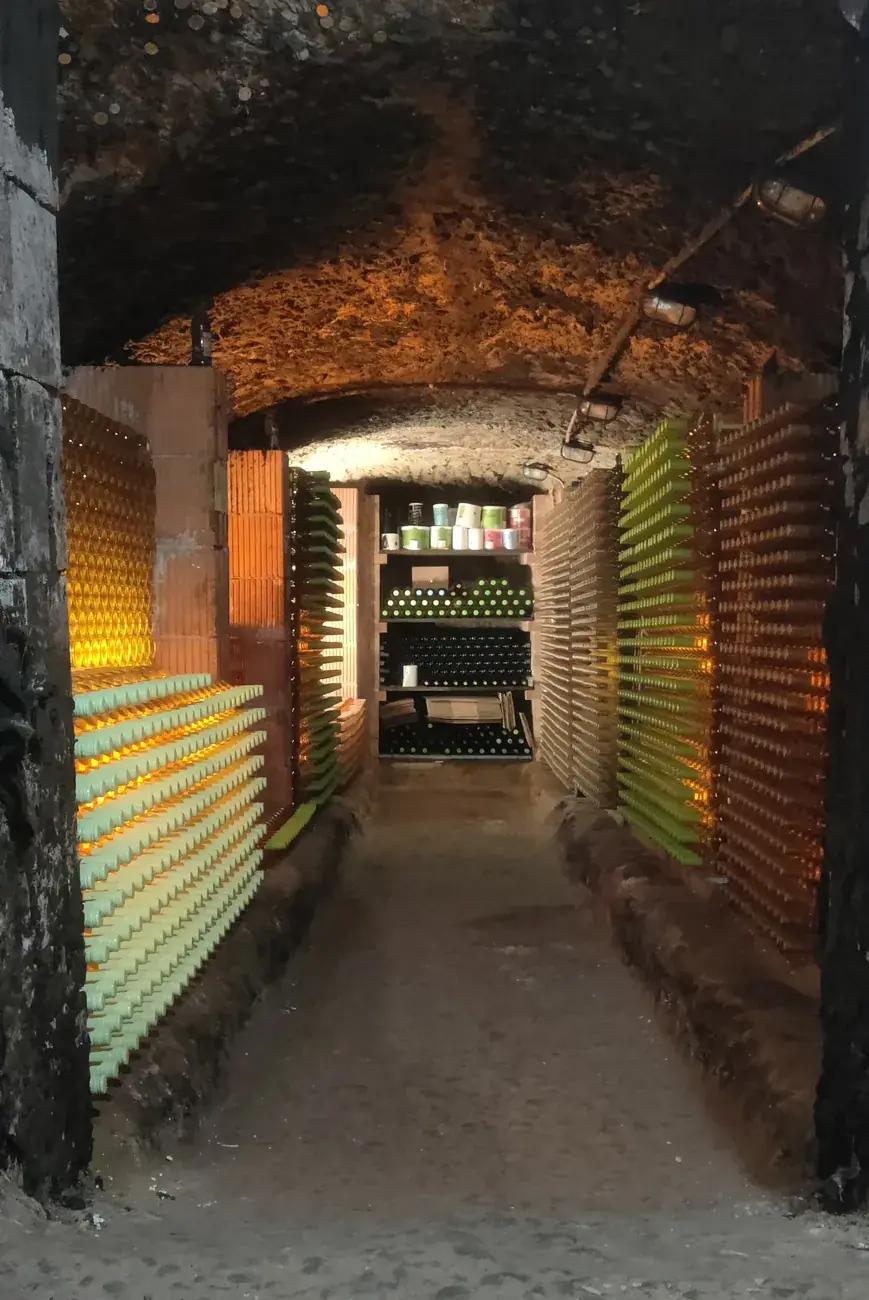
Hercegkút lies in the heart of Tokaj-Hegyalja: you don't travel to the wine region, you are in it. The Kőporosi cellar row begins directly at the guesthouse. Deep in the cellar carved from rhyolite tuff, wine tastes different.
- Our own cellar with decades of history
- Tokaj-Hegyalja wines from local vineyards
- Guided wine tasting program available
- Private, only your group
- Evening atmosphere tailored to your wishes
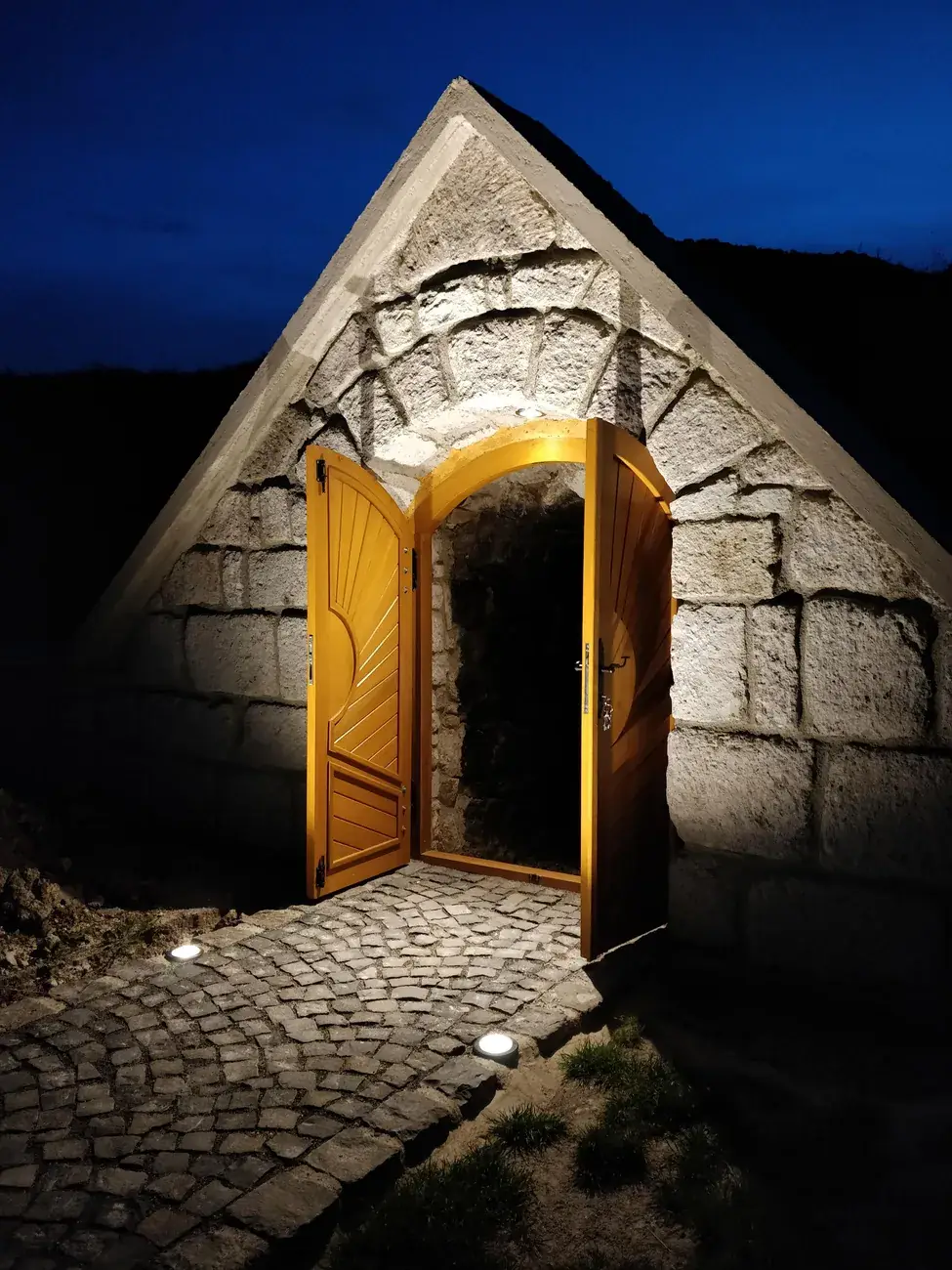
The Kőporosi and Gombos-hegyi cellar rows
Hercegkút was founded in 1750 as a Swabian settler village. These hardworking settlers quickly mastered the vine and wine culture of Tokaj-Hegyalja, and stored the finished wines in the cellars carved into the hillsides along the village's two cellar rows.
The Kőporosi and Gombos-hegyi tiered cellar rows have since become one of the most recognised symbols of Tokaj-Hegyalja. The cellars were built on four levels above each other; behind the characteristic triangular entrances, tunnels up to forty metres long carved into rhyolite form a multi-storey cellar system. Hercegkút has 195 cellars carved into rhyolite that are still in use today. Among them is the guesthouse's own family winery, the Hajnalhozó Cellar.
The wine region has been recorded since 1737 as the world's first closed wine region, and in 2002 it became a UNESCO World Heritage Site.
Our vineyards
The Hajnalhozó Cellar farms 2.6 hectares across four vineyard plots. Since 2023 the family winery has made its wines from 100% estate-grown grapes.
Fürdős plot
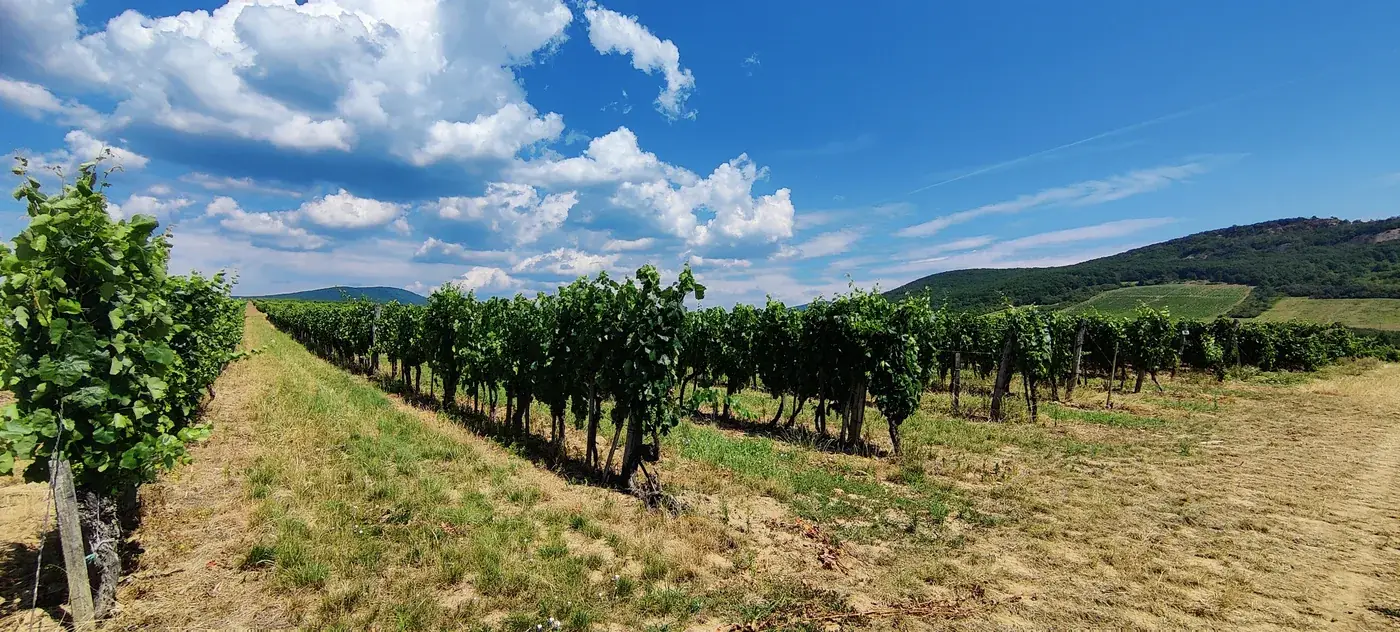
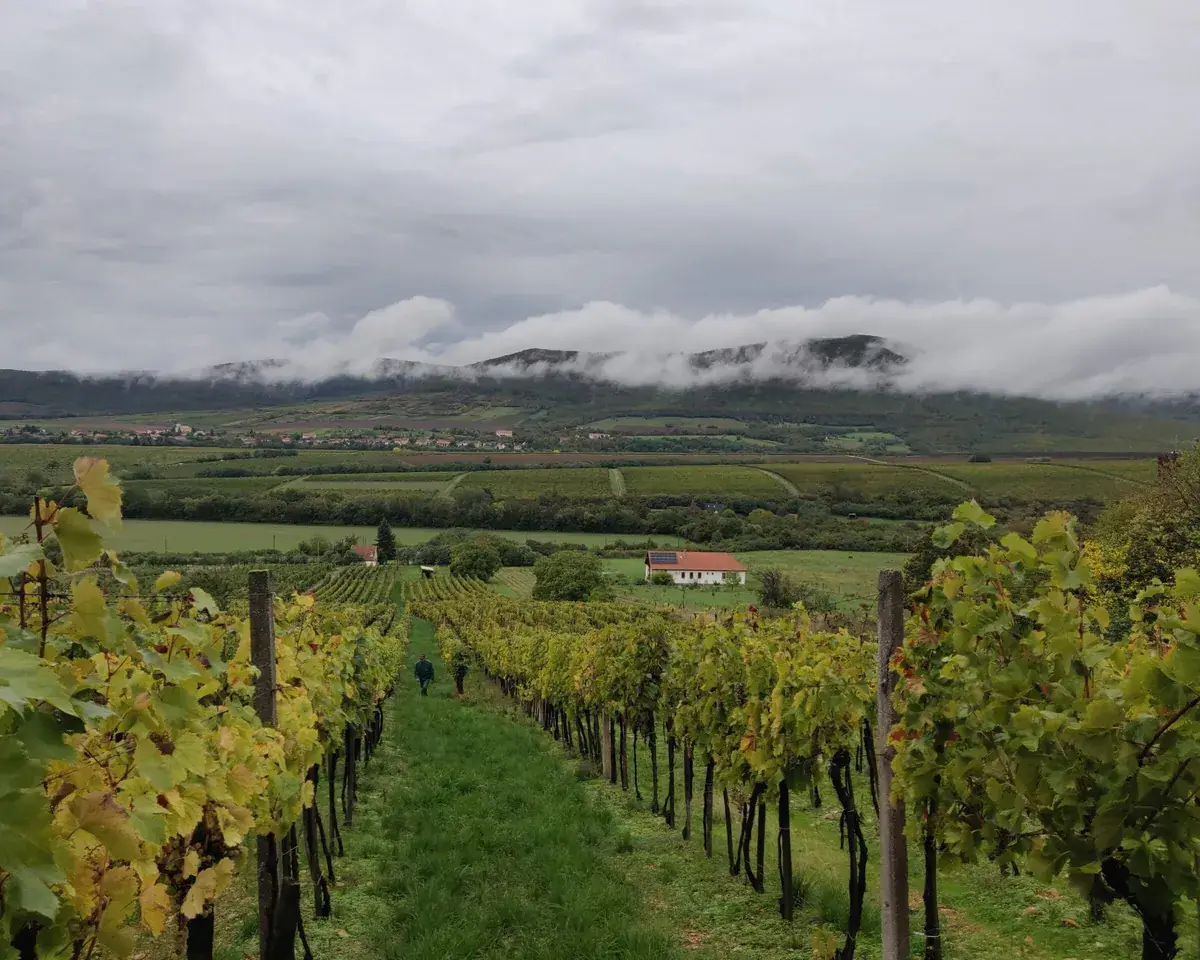
The estate's most important parcel is made up of blocks bought from several private owners. The oldest part was planted in 1979, the newest in 1985; today it's a little over one hectare. Volcanic rhyolite-tuff bedrock, southwest-facing, a mixed planting, but mostly Furmint. If you're a smaller group of up to four, it's worth walking up to the top of the plot with a bottle of wine: this is where the finest view over the landscape opens up before you.
Kereszt plot
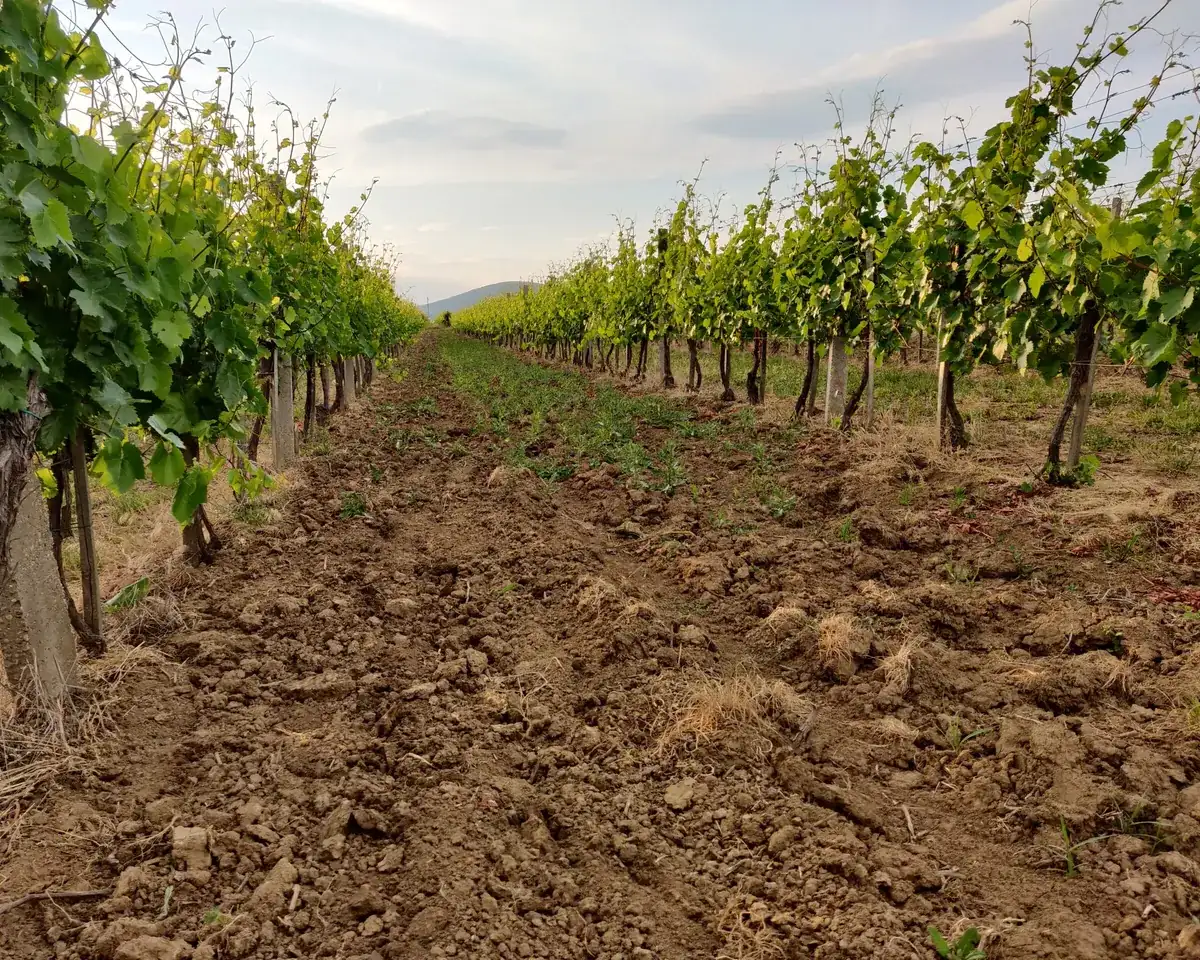
Planted in 1985, one hectare, with wide row spacing so the sun can travel right around the vines. Brown forest soil over rhyolite-tuff bedrock, planted entirely with the Zengő variety. A real speciality: this variety, unusual for the region, gives the wine a uniquely light, silky and soft character.
Gombos-hegy plot
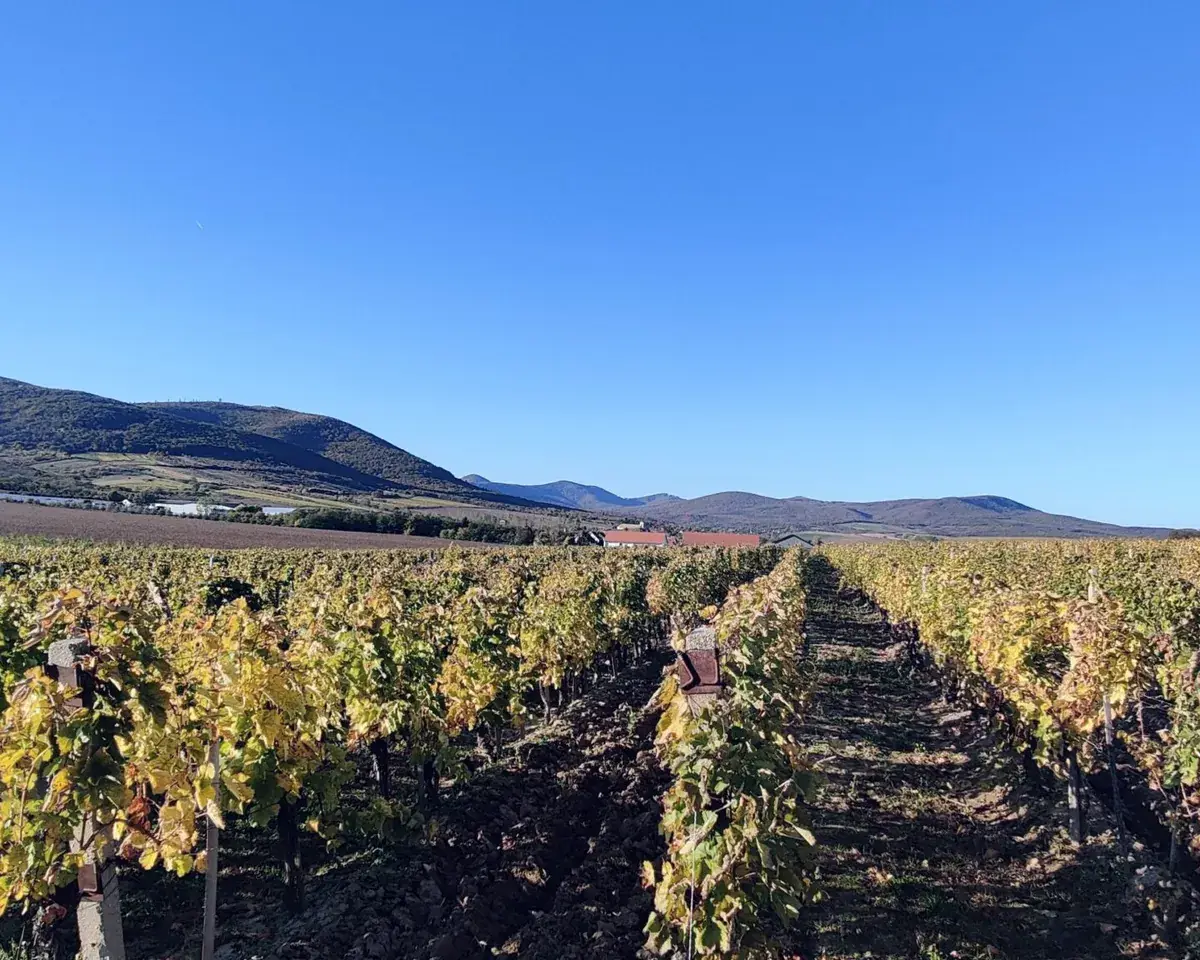
Planted in 1970, about a third of a hectare, with standard 240 cm row spacing. Brown forest soil over rhyolite-tuff bedrock. Mostly Furmint, specifically Madárkás Furmint, a small-berried, traditional Furmint variant. The site develops noble rot exceptionally well, so we mostly leave it for a late harvest, hoping for botrytis.
Makra plot
About a third of a hectare, planted in 1979, brown forest soil over rhyolite-tuff bedrock. A wooden-post trellis system planted with Hárslevelű, Tokaj-Hegyalja's second most widespread variety; the old part has 3.5-metre row spacing. It joined the winery in 2025 to broaden the range of varieties.